Understanding Acne
A calm, clinical guide to what’s really happening in your skin
Acne is common, complex and deeply personal. This page is designed to give you clear, evidence-based information—so you can move forward with confidence, whether you choose medical-grade skincare, prescription treatment, or advanced energy-based options like AviClear.
Nothing on this page replaces a consultation with a qualified clinician, but it can help you understand why acne behaves the way it does—and why modern, targeted treatments can be so effective.
What exactly is acne?
Clinically, acne (acne vulgaris) is a chronic inflammatory condition of the hair follicles and oil (sebaceous) glands. It develops when pores become clogged with excess oil, dead skin cells and sometimes bacteria, leading to bumps on the skin that can be red, tender, or deep and cystic.
Acne is not simply a “dirty skin” problem. It is driven by several overlapping factors: oil production, the way your skin sheds cells, inflammation, hormones and genetics. This is why two people can use the same products and have completely different outcomes—and why professional assessment matters.
Most people experience acne in adolescence, but it is increasingly common in adults—especially women in their 20s, 30s and 40s. Adult acne often behaves differently, tends to linger, and can be particularly frustrating when breakouts and early signs of ageing appear together.
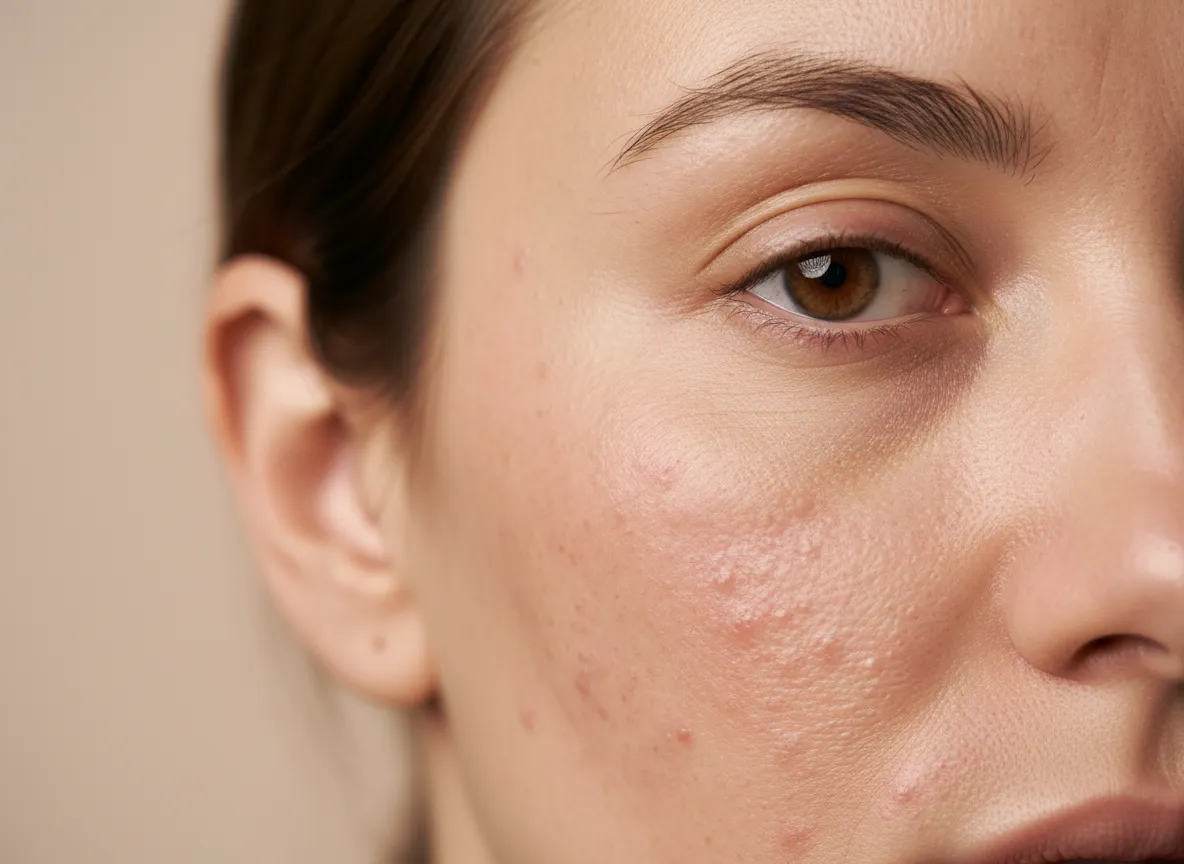
Think of acne as a long-term skin tendency, not a short-term flaw. The goal of treatment is to calm this tendency, protect the skin barrier and minimise the risk of scarring—while keeping the complexion as clear, refined and comfortable as possible.
Common types of acne lesions
Most people have a mix of different lesion types. Recognising what you see in the mirror helps guide which treatments are most appropriate.
Comedonal acne
Blackheads and whiteheads caused by clogged pores. Blackheads are open comedones with a dark surface; whiteheads are closed comedones that appear flesh-coloured or slightly white.
These are usually less inflamed but can give the skin a rough, uneven texture. They often respond well to ingredients that normalise cell turnover and keep pores clear, such as retinoids.
Inflammatory papules & pustules
These are the classic “spots” or pimples—raised, red bumps that can be tender (papules) and may develop a white or yellow centre (pustules) as inflammation builds.
They are a sign that the immune system is reacting inside the follicle. Calming inflammation, supporting the barrier and addressing oil production are key here.
Nodules, cysts & post-acne marks
Nodules and cysts are deeper, more painful lesions that sit beneath the surface and can take weeks to resolve. They carry a higher risk of scarring and almost always warrant professional input.
Even once active breakouts settle, many people are left with post-inflammatory erythema (red marks), post-inflammatory hyperpigmentation (brown marks), or true acne scars. These concerns are very treatable with the right combination approach.
What actually causes acne?
Acne is rarely about a single cause. Instead, it’s the result of four main processes inside the pilosebaceous unit (the hair follicle and its oil gland):
- Increased sebum (oil) production – often driven by androgens (a type of hormone), genetics and sometimes medications.
- Abnormal shedding of skin cells – dead cells stick together instead of shedding cleanly, forming a plug in the pore.
- Cutibacterium acnes (C. acnes) activity – a normal skin bacterium that can trigger inflammation when trapped inside clogged pores.
- Inflammation – both at the surface and deep within the follicle, influencing redness, swelling and tenderness.
These internal drivers are then influenced by external and lifestyle factors. Understanding your unique combination of triggers helps tailor a treatment plan that is both effective and sustainable.
Common triggers & aggravating factors
- Hormonal fluctuations – puberty, menstrual cycles, stopping/starting certain contraceptives, pregnancy or perimenopause.
- Genetics – a strong family history of acne often predicts more persistent or severe breakouts.
- Skincare & makeup – occlusive or comedogenic products, harsh scrubs and over-cleansing can all disrupt the barrier.
- Stress – influences hormones and inflammatory pathways, often worsening flares.
- Diet & lifestyle – high-glycaemic diets, some dairy, smoking and poor sleep may contribute for some individuals.
- Medications – including some steroids, testosterone and certain mood or epilepsy medicines.
Acne myths vs. clinical reality
Misinformation around acne is everywhere. Clearing these myths helps reduce shame and opens the door to evidence-based solutions.
Myth 1: “Acne means my skin is dirty.”
Fact: Acne is not caused by poor hygiene. In reality, over-washing and stripping the skin often make breakouts worse by disrupting the barrier and driving more inflammation. A gentle, consistent routine is far more effective than aggressive “drying out.”
Myth 2: “I’ll just grow out of it.”
Fact: Many teenagers do outgrow acne, but a significant number of people continue to struggle into adulthood. Waiting it out can mean years of unnecessary discomfort and a higher risk of scarring or pigment changes that are harder to treat later.
Myth 3: “If my skin stings, it must be working.”
Fact: Sensation is not a marker of effectiveness. Burning, stinging and peeling are signs your barrier is compromised. Healthy, clear skin is usually comfortable—especially when you are using well-designed, evidence-based treatments at appropriate strengths.
Myth 4: “Professional treatments are a last resort.”
Fact: Early, appropriate treatment can prevent years of distress and visible scarring. Modern dermatology and medical aesthetics offer a spectrum of options—from prescription topicals to oral medications and advanced devices like AviClear—that can be tailored to your skin, goals and lifestyle.
Acne, skin health & self-confidence
The impact of acne goes far beyond the surface. Many people describe planning their day around their skin, avoiding social events or cameras, and feeling as though their complexion speaks before they do.
Clinically, acne is associated with higher rates of anxiety, low mood and body image concerns—regardless of how “mild” or “severe” the breakouts may look to others. Your experience of your skin is valid, even if someone else’s acne appears worse on paper.
From a medical-aesthetic perspective, our role is to protect both the health and the appearance of your skin. That means treating active breakouts, minimising future flares, and carefully addressing any scars or pigment left behind—always with respect for your natural features and skin barrier.
Skin-barrier first: a “glass skin” inspired philosophy
The aesthetic ideal of “glass skin” is luminous, calm and refined—not stripped, sore or over-processed. Modern acne care embraces this: we aim to reduce congestion and inflammation while preserving radiance, elasticity and comfort.
- Prioritise barrier-supportive cleansers, moisturisers and sun protection.
- Use targeted actives (such as retinoids, azelaic acid or chemical exfoliants) in thoughtful, personalised combinations.
- Layer in in-clinic treatments—like light-based therapies, gentle peels or devices such as AviClear—when they add meaningful benefit.
- Move at the pace your skin can tolerate, favouring steady, sustainable improvements over quick but temporary “purges.”
When to consider professional acne treatment
It is never “too soon” to seek expert support if acne is affecting the way you feel or the way your skin behaves. A consultation does not commit you to any specific treatment; it simply opens up options.
Reasons to seek help sooner rather than later:
- Your acne is leaving marks, discoloration or indentations (scars).
- You have deep, painful nodules or cysts, or breakouts on the chest/back.
- Over-the-counter products are no longer making a meaningful difference.
- Your skin reacts badly to many products, or you are unsure what to use.
- Acne is impacting your confidence, work, social life, or intimacy.
- You are interested in minimising future scarring and long-term pigment issues.
What to expect from a clinical assessment
A thoughtful consultation will explore your skin history, current products. We assess the type and severity of your acne, your skin type and tone, and the presence of scars or pigment. From there, we can outline a realistic, personalised plan that might include skincare and in-clinic procedures.
The goal is to give you clarity: which options are available, what each can and cannot do, expected timelines, and how to protect your skin along the way. You remain in control of how gently or aggressively you choose to treat your acne.
Where AviClear fits in modern acne care
Today’s acne management is layered. Rather than relying on a single cream or tablet, we combine lifestyle guidance, medical-grade skincare, prescription options and advanced technologies to target acne from multiple angles.
Energy-based and laser treatments for acne
Light and laser devices have become important tools in acne management. Different technologies can:
- Target the bacteria associated with acne.
- Reduce inflammation in active lesions.
- Influence sebaceous (oil) gland activity.
- Stimulate collagen to improve the appearance of certain acne scars.
These treatments are typically used alongside a considered at-home routine and, where appropriate, topical or oral prescriptions. The aim is to shorten active flare-ups, reduce reliance on long-term medications, and support clearer, calmer skin over time.
How AviClear works within this landscape
AviClear is an FDA-cleared, energy-based treatment designed specifically for acne. Unlike many traditional lasers that primarily target pigment or surface redness, AviClear is engineered to selectively target sebaceous glands—one of the core drivers of acne formation.
A series of 3 treatments is typically required; results build gradually.
By reducing sebaceous gland activity, AviClear aims to address acne at its source rather than just treating individual breakouts.
It can be an option for patients who wish to avoid or cannot tolerate certain oral medications.
It is usually integrated into a broader plan that may include skincare, lifestyle modifications and, where appropriate, prescriptions.
During a consultation, we can explore whether AviClear is appropriate for you, and how it might complement other elements of your personalised treatment plan.
Moving from information to a personalised plan
If this guide has helped you understand your skin a little better, the next step is simply a conversation. During an in-person or virtual consultation, we can assess your acne, review what you’ve already tried, and outline the options—from refined skincare and prescriptions to advanced treatments such as AviClear—that best match your skin, lifestyle and goals.
There is no obligation to proceed with any particular treatment. Our role is to provide clarity, calm and clinically grounded guidance, so you can make informed decisions about your skin.